Press Release · PhotoShelter
New PhotoShelter Survey Finds Consumers Want Authentic Content, While Brands Invest in the Wrong Platforms
Distributed by CodeComma · Originally issued via PRWeb
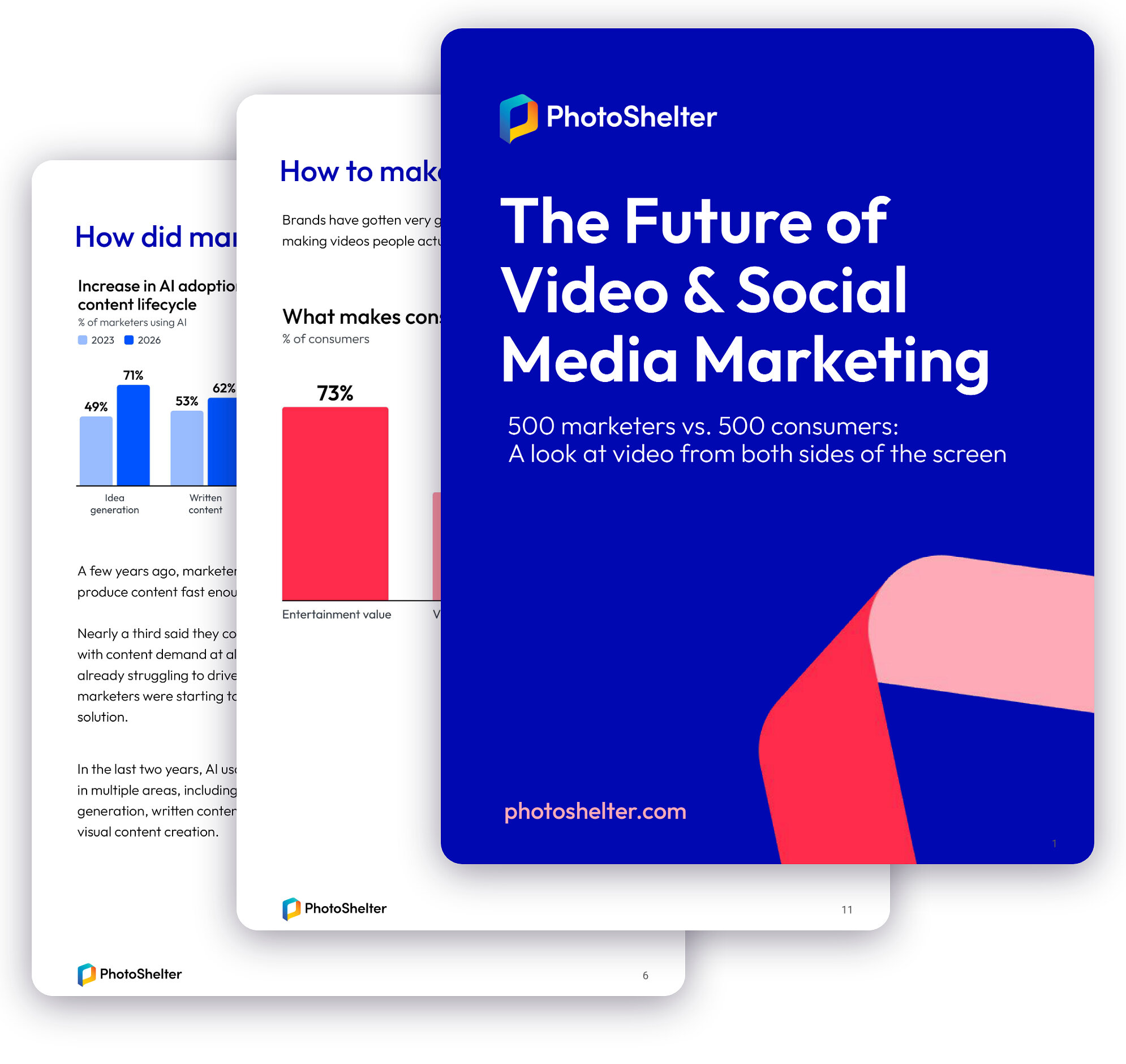
New PhotoShelter research surveying 500 marketers and 500 consumers finds that more content doesn't mean more engagement
NEW YORK, Nov. 4, 2026 — Consumers are watching more social video than ever, but branded and product content accounts for just 17% of the video they actually engage with, according to new research from PhotoShelter, a leading AI-powered digital asset management (DAM) platform for marketers and creatives. The findings suggest brands need to rethink the content they're creating to earn consumers' attention and trust. The research also points to what builds that trust: 62% of consumers say creative and original videos make them trust a brand more.
The Future of Video & Social Media Marketing report surveyed 500 U.S. marketing professionals and 500 U.S. consumers to see the impact of social media video on both sides of the screen. Two-thirds of consumers (67%) say their viewing has increased over the past two years, and 60% now spend at least an hour a day on social video.
"People keep watching when they feel like they're seeing something real," said Christina Kyriazi, Chief Marketing Officer of PhotoShelter.
Post thisIn response to the rise in consumption, marketing teams produced more. However, the consumer survey shows that the increase in output is not correlating with an increase in engagement.
Key findings include:
- Audiences are watching plenty of video, just not branded, polished videos. The content they engage with most is entertainment (71%), news (43%), music (42%), and sports (39%). Nearly all (92%) say they skip sponsored or brand-related video at least some of the time.
- Brands get about five seconds. More than half of consumers (52%) decide whether to keep watching a video within the first five seconds.
- Marketers aren't investing where consumers are watching. YouTube and TikTok are where consumers spend the majority of their time watching videos. However, marketers are investing most of their video budgets into Instagram, and spreading their remaining spend evenly across YouTube, TikTok, and Facebook.
- Marketers are leaning on AI, and it's the top reason people scroll past. Most marketing teams use AI in video production (85%), yet "looks AI-generated" is the top reason consumers scroll past (24%), ahead of taking too long to get to the point (20%).
- More video is making the problem worse. Nearly a third of consumers (32%) say social video already feels repetitive and 28% say there is more of it than they can realistically keep up with.
"People keep watching when they feel like they're seeing something real," said Christina Kyriazi, Chief Marketing Officer of PhotoShelter. "A player's reaction, a fan's celebration, something behind-the-scenes; that's the content people connect with. When you capture that and get it out there while the moment is still happening, the person watching at home feels like they're a part of it."
Marketers Underestimate How Much Consumers Care About Authenticity
Marketers and their audiences are not worried about the same thing. Only 11% of marketers name brand reputation risk as their biggest AI concern. But over half of consumers (56%) say knowing AI was used would make them trust a brand less.
With budget as the top barrier for marketers, AI is how teams are keeping up with demand. Eighty-five percent use it for at least one part of video production, including editing footage, finding clips, translating content, and creating versions for different channels. Roughly 1 in 3 use it to create visual assets or write scripts and copy, and more than 20% are producing fully AI-generated videos.
Consumers have noticed — 91% say they have seen more AI-generated or AI-edited video in the past two years, and 81% are at least somewhat confident they can tell when content was made with AI.
What earns trust runs the other direction. Authentic and genuine video earns it for 61% of consumers, and video featuring real customers, employees or creators earns it for 36%.
"Marketers worry AI will produce something inaccurate or off-brand," added Kyriazi. "Audiences worry it made everything. Most teams don't need to make more video; they need to make more authentic video, and let AI handle the tagging, clipping, and searching so their people can spend time on the work that has to earn those five seconds."
For the full findings, download The Future of Video & Social Media Marketing.
Methodology
PhotoShelter conducted two surveys in June 2026 via Pollfish, an online survey platform. The first polled 500 U.S. marketing professionals involved in their organization's content marketing strategy at companies with 100 or more employees, ages 18 to 64. The second polled 500 U.S. consumers ages 18 to 64 who spend at least 15 minutes a day watching social media video.
Media Contact
Samantha Stone, PhotoShelter, 1 617-365-5829, [email protected], www.photoshelter.com
SOURCE PhotoShelter
About PhotoShelter
Founded in 2005, PhotoShelter is a leading AI-powered digital asset management (DAM) platform for marketers and creatives, simplifying how teams collect, organize, and distribute content. PhotoShelter has been building AI into content workflows since 2023, when it launched AI Visual Search and established a formal AI Ethics Board to govern how those features are built. Those features now process more than 267 million images and videos a year. Trusted by global brands like the NFL, MLB, Purdue University, and Wendy's, PhotoShelter securely manages 7.6 billion assets and supports more than 122 million annual downloads.